CHAPTER ONE
God Is a King, Not a Genie
“You have been approaching the most powerful Being in the universe with the wrong mental model.”
I have come to believe there is a model of God that has quietly shaped the prayer lives of more people than any theology book or church tradition ever could.
It is not taught explicitly. It is absorbed. It seeps in through the accumulated experience of years of unanswered requests, of watching others pray and receiving nothing, of the subtle but persistent cultural message that prayer is essentially the spiritual equivalent of sending a wish into the universe and hoping something comes back. Put into words, the model goes like this: God is a being of immense power who can do anything. He exists somewhere beyond the observable world. When you need something, you close your eyes, say the right words with sufficient sincerity, and wait to see whether He decides to grant it. He may. He may not. His decisions are largely unpredictable. Your job is to be persistent enough, humble enough, and faith-filled enough to improve your odds.
In this model, God functions less like a King and more like a cosmic genie: unpredictable, whimsical, operating according to criteria that are never quite clear, granting wishes to some and withholding them from others for reasons that may or may not have anything to do with the worthiness of the one asking.
I believe this mistaken model is the greatest obstacle to an effective prayer life.
The Damage the Wrong Model Does
The mental model you carry into prayer determines everything about what happens there. It determines the posture you bring, confidence or desperation. The expectations you carry, certainty or anxiety. The persistence you sustain, governing authority or exhausted pleading. And the interpretation you place on silence: whether unanswered prayer feels like evidence that God is not listening or evidence that the timing of His response is governed by wisdom you have not yet been given access to.
If you approach prayer with the genie model, you will pray as a supplicant at the mercy of a capricious power. You will measure your faith by whether your requests are granted. You will interpret silence as rejection. You will oscillate between hope when things go well and doubt when they do not. And at some point, for many people, at many points, the gap between what you asked for and what you received will feel too large to bridge, and the prayer life will quietly contract, or quietly end.
This does not happen because God failed to show up. It happens because the model failed to reflect reality. That misunderstanding shapes how you pray.
What a Kingdom Actually Is
Before we can understand God as King, I want to establish what a kingdom actually is: because the word has been used so often in Christian culture that it is lost much of its structural content. When most people hear “the Kingdom of God,” they think of a spiritual state, or a future realm, or a vague quality of divine presence. What they do not typically think of is a government.
A kingdom is a government: a system of authority with identifiable components that are consistent across every kingdom that has ever existed in human history.
Every kingdom, by definition, has the following:
• A King. A sovereign ruler with supreme authority over the entire domain. Not a president who can be voted out, not a manager who can be overruled, but a king whose word is final, whose character defines the culture of the entire realm, and whose authority is inherent rather than delegated.
• A Territory. A specific domain over which the king’s rule extends. Kingdoms are not abstractions. They are territorial realities. A king who rules nowhere is not a king.
• A Constitution. The laws and principles by which the kingdom is governed. These are not suggestions. They are the binding framework of the entire realm, and they reflect the character and will of the king who established them.
• Citizens. Subjects of the kingdom who carry specific rights, responsibilities, and privileges by virtue of their citizenship. Citizens are not visitors. They have a legal standing in the kingdom that visitors do not possess.
• A Culture. The values, language, economy, and way of life that flows from the king’s character throughout the entire realm. The culture of a kingdom is the king’s character made visible in the behavior of his people.
• Protocol. The established procedures by which business is conducted in the kingdom, particularly in matters of petition and governance. Kingdoms have courts. Courts have procedures. Protocol is not ceremonial excess: it is how the kingdom conducts its business.
Now read that list again, and consider: every single element on it applies with absolute precision to the Kingdom of God.
God is the King, not metaphorically but ontologically, meaning by the very nature of His being. The earth is His territory: “The earth is the Lord’s, and all its fullness” (Psalm 24:1). The Bible is His constitution: the governing document of His realm, binding and permanent. Human beings are His citizens: or, more precisely, were designed to be, and are restored to that status through Christ. The character of God, His holiness, love, justice, and faithfulness, is the culture of the Kingdom. And prayer is the primary channel of Kingdom protocol: the established procedure by which citizens bring petitions before the throne.
Why This Changes Everything About Prayer
Understanding God as King changes how you approach Him.
In the genie model, you come to God not knowing if He is in a good mood, not knowing if your words are the right ones, not knowing if today is the kind of day He feels like granting requests. Every prayer carries anxiety, not about God’s power, but about His disposition toward you in this particular moment.
In the kingdom model, you come to God as a citizen approaches a constitutional monarch. The King’s character does not change. His covenant does not expire, and His constitution does not have bad days. The principles that govern your access to the throne are stable, documented, and available for you to study at any time. You know why you have access and on what basis your petition is received. You know what the constitution says about how the King responds to the prayers of His citizens. So you pray from that knowledge, with the settled certainty that He designed the entire system so that He could hear you, and not with a hope that He might be listening.
A genie may or may not be listening. A King who built the communication system is always listening. He built it precisely so He could hear you. The question is never whether He is available. The question is whether you understand the system.
The King Who Came to His Own Kingdom
One of the most telling details in the Gospel accounts is the content of Jesus’s very first public message. After thirty years of silence, after His baptism and the temptation in the wilderness, Jesus opens His public ministry with a single sentence that sets the agenda for everything that follows:
“Repent, for the kingdom of heaven is at hand.” Matthew 4:17
Not “Believe in me.” Not “Join my movement.” Not “Here is a better moral system.” The kingdom is at hand. The governing reality of heaven, its culture, its authority, its protocol, its constitution, has arrived in the person of the King Himself.
Jesus did not come to earth to found a religion. Religions are human systems designed to help people connect with the divine. Jesus came as the divine breaking into the human world, not to establish a new system but to restore an ancient one. The Kingdom of God existed before every religion, and even before the earth itself. Jesus came to announce that the King had arrived and that the domain had been reclaimed. The protocol of the Kingdom, including prayer as its primary governing mechanism, was once again fully operational for everyone willing to receive their citizenship.
The Radical Consistency of the Kingdom
Understanding God as King gives you a consistent basis for prayer.
A genie is unpredictable by nature, because arbitrary power has no fixed rules. A King who governs by constitution is consistent all the way through. He cannot contradict His own law without ceasing to be the kind of King His law describes. If He promised in His constitution and then failed to deliver, the whole framework of His authority would be undermined. A constitutional King is bound by the perfect integrity of His own character, expressed in the laws He established. That binding comes from His strength and faithfulness, and never from weakness.
This is why the Bible makes statements about prayer that sound, to the person carrying the genie model, almost offensively confident. “Whatever things you ask when you pray, believe that you receive them, and you will have them” (Mark 11:24). “If you ask anything in My name, I will do it” (John 14:14). “Ask, and it will be given to you” (Matthew 7:7). These are not the promises of a genie who might feel generous today. They are the constitutional commitments of a King who governs by His own word and cannot contradict Himself.
The conditions attached to these promises, asking in His name, believing, aligning with His will, are not obstacles designed to make prayer harder. They are the constitutional conditions of Kingdom citizenship. They define the context within which the King’s commitments apply. Understanding them is not a matter of jumping through hoops. It is a matter of understanding the system well enough to operate within it effectively.
That understanding begins with the distinction we have been making: God is a King, not a genie.
What the King’s Character Guarantees You
The King’s character gives every citizen grounds for confidence before His throne.
Because the kingdom model is not only more accurate than the genie model, it is infinitely more generous. A genie is powerful but limited. A genie’s resources are finite and its interest in you is transactional. But a King who is also, as Scripture declares, a Father, whose love for His citizens is not an obligation but an overflow of His nature, brings something to the throne room that no genie could ever offer.
• Consistent Access. The King has built a direct, unmediated channel from you to His throne. You do not need an appointment. You do not need to go through intermediaries. You do not need to earn access through performance. “Let us therefore come boldly to the throne of grace” (Hebrews 4:16). The door is open. It was designed to be open. It will not close.
• Constitutional Certainty. The King’s promises are written down, available for study, and unchanging. You do not need to guess what He has committed to. His constitution, the Bible, records His covenant obligations to His citizens with the permanence of law and the intimacy of relationship. When you pray a prayer that aligns with His Word, you are praying within the constitutional framework of a King who cannot lie.
• Response That Is Always Real. The King responds to every petition that reaches His throne. Not always in the time frame you expect, not always in the form you anticipated, but always with the wisdom of the One who sees the whole picture from a vantage point you do not yet occupy. A genie’s silence is absence. A King’s silence is often the space between a petition received and a response being prepared.
• A Relationship, Not Just a Transaction. This is what no genie can offer and what every King who is also Father brings to every audience. The throne room of this Kingdom is not a transaction counter. It is a meeting place. The King speaks there too. Petition and response become communion. Prayer in the Kingdom framework is not a monologue you deliver to a powerful being. It is a conversation you enter with a God who designed it specifically so that He could hear you and you could hear Him.
The Listening Dimension
A relationship with a King who speaks asks us to listen.
The genie model produces a one-way channel: you speak, the genie acts (or does not). But the kingdom model produces a two-way relationship: you speak, and the King responds. Not always through audible words, not always through immediate circumstances, but through the quiet, unmistakable language of a God who is not silent.
This is why every genuinely effective prayer life includes significant portions of silence. It is the attentive silence of a citizen waiting on a King who has promised to speak.
The God you are approaching in prayer is not a genie waiting for your wish list. He is a King who has things to say to you that are more important than anything on your list. Silence in prayer is not wasted time. It is the space you create for the King to speak. And learning to inhabit that space, learning to be still and know that He is God, is among the most powerful prayer practices available to a Kingdom citizen.
THE SHIFT THAT STARTS EVERYTHING
Stop approaching prayer as a wish delivery system and start approaching it as an audience with a King. Not because this makes prayer more formal, but because it makes it more real. The King you are addressing designed the channel through which you are speaking. He is not surprised by your arrival. He has been expecting you.
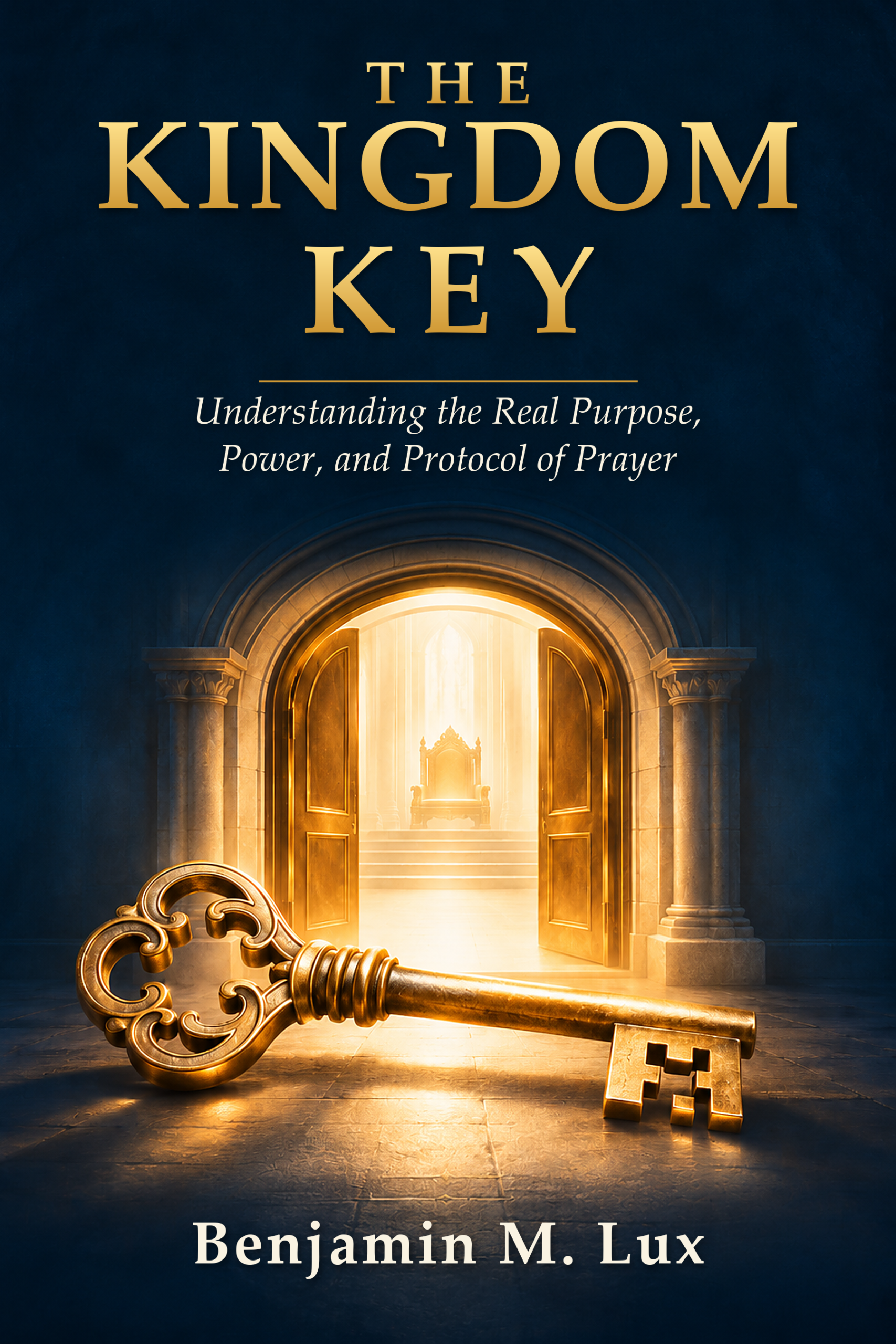
KINGDOM KEY
God is not a genie who may or may not grant your requests. He is a constitutional King whose character, covenant, and promises are unchanging, and who built the entire prayer system specifically so that His citizens could reach Him with certainty.
Reflection Questions
1. In your honest experience, has your mental model of God in prayer been closer to a king or a genie? What specific evidence in your prayer life points you to that answer?
2. If God’s character is constitutionally consistent, if He cannot contradict His own Word, what does that mean for the prayers you have prayed that seemed to go unanswered? Does the kingdom model suggest a different interpretation of those experiences?
3. This chapter ends with the observation that the King speaks as much as you do in prayer. When did you last leave extended silence in a prayer session for Him to do so? What has that silence produced, or what might it produce if you gave it a genuine chance?
Kingdom Declaration
Speak this aloud, not as a wish, but as a governing decree:
Father: I come before You today not as someone appealing to an unpredictable power, but as a citizen approaching a constitutional King. I declare that Your character does not change. Your covenant does not expire. Your promises are written and permanent. I bring my voice to Your throne with the confidence of someone who knows that the door was designed to be open, and I remain in Your presence long enough to hear what You came to say to me. Speak, King. Your citizen is listening.
This Week’s Practice
This week, before each prayer session, speak this aloud: “I am not approaching a genie. I am entering the throne room of a constitutional King who has given me guaranteed access by covenant.” Then, at the end of each session, sit in silence for at least three minutes. Do not fill it with more requests. Simply be present, open, and attentive. Keep a brief note of anything that surfaces in that silence: a thought, an impression, a scripture, a sense of peace or direction. By the end of the week, review your notes. Something will have been said.
— Buy this book or subscribe to keep reading —












Reviews
There are no reviews yet.