
Anabasis (Audiobook)
£2.99Xenophon’s firsthand account of ten thousand Greek mercenaries stranded deep in Persia, and their desperate march back to the sea.
Showing 1–16 of 24 results

Xenophon’s firsthand account of ten thousand Greek mercenaries stranded deep in Persia, and their desperate march back to the sea.
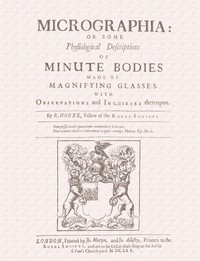
Robert Hooke’s 1665 masterpiece of microscopy first showed the world plant cells, flea anatomy, and the surface of a needle — and coined the word ‘cell’.

Mill’s landmark defence of individual freedom against the tyranny of both government and public opinion, still cited in free-speech arguments today.
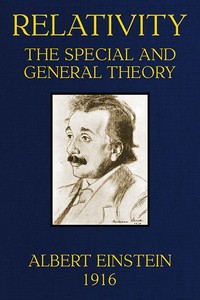
Einstein explains his own theory of relativity in plain language, written for readers with a general scientific background rather than fellow physicists.
Booker T. Washington traces his path from enslaved child to founder of the Tuskegee Institute, arguing that education and self-reliance were the routes to Black advancement.

Mill lays out the case for judging actions by their consequences, and for the greatest happiness of the greatest number, in the classic statement of utilitarian ethics.
Douglass’s own account of his life in slavery and his escape to freedom, published to devastating effect in 1845 and still one of the most powerful documents of American history.
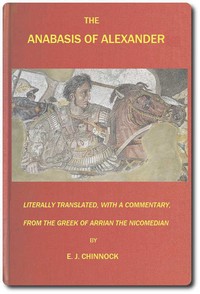
Arrian’s campaign history follows Alexander the Great from Macedon to India, drawing on eyewitness accounts written by the general’s own officers.
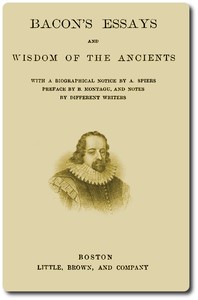
Bacon’s short, quotable essays on truth, ambition, friendship, and dozens of other subjects, written in prose so dense with observation it’s still mined for quotations.
Xenophon’s firsthand account of ten thousand Greek mercenaries stranded deep in Persia, and their desperate march back to the sea.
Booker T. Washington traces his path from enslaved child to founder of the Tuskegee Institute, arguing that education and self-reliance were the routes to Black advancement.
Mill’s landmark defence of individual freedom against the tyranny of both government and public opinion, still cited in free-speech arguments today.

An Athenian general-turned-historian records the brutal, decades-long war between Athens and Sparta that he lived through and was exiled for losing a battle in.

The ‘Father of History’ travels the ancient world recording the customs of Egypt, Persia, and Greece, and the wars between them — volume one of his sprawling account.
Mill lays out the case for judging actions by their consequences, and for the greatest happiness of the greatest number, in the classic statement of utilitarian ethics.

Plutarch pairs Greek and Roman statesmen and generals in biographical sketches that shaped how the West understood its own history for two thousand years.